Ask three web designers for a quote, and you’ll often get three very different numbers. That doesn’t always mean one of them is ripping you off. They may simply be pricing different jobs.
In most cases, small business website cost in the UK range between £1,500 and £6,000 according to most online guides. Building companies such as Wix begin their charges from around £9 per month. Your final cost will vary depending on your website’s requirements, the design you want, and the cost of maintenance.
Here, we’ll walk you through how to compare quotes, where the hidden charges tend to hide, and how to land on a budget you can live with.
What Does a Small Business Website Cost in the UK in 2027?
Typical Prices by Type of Website
| Option | Rough cost | How you pay | Suits |
| DIY or AI builder | About £9 to £25 a month on annual plans | Monthly, plus domain | Simple sites, tight budgets |
| 5-to-10-page freelancer site | £500 to £4,000 (many guides say £1,500 to £3,000) | One project fee | Most small businesses |
| Agency built site | £2,500 to £10,000 | One project fee | Teams wanting wider support |
| Online shop | £16 to £19 a month on builders; £2,000 to £5,000 for standard WooCommerce or Shopify builds | Monthly or project fee | Selling products online |
| Custom website | £5,000 to £15,000, more for complex work | One project fee | Bookings, portals, integrations |
You’ll see “£1,500 to £6,000” repeated all over the web as the average. It’s a market claim, not an official statistic.
What You Get at Each Price
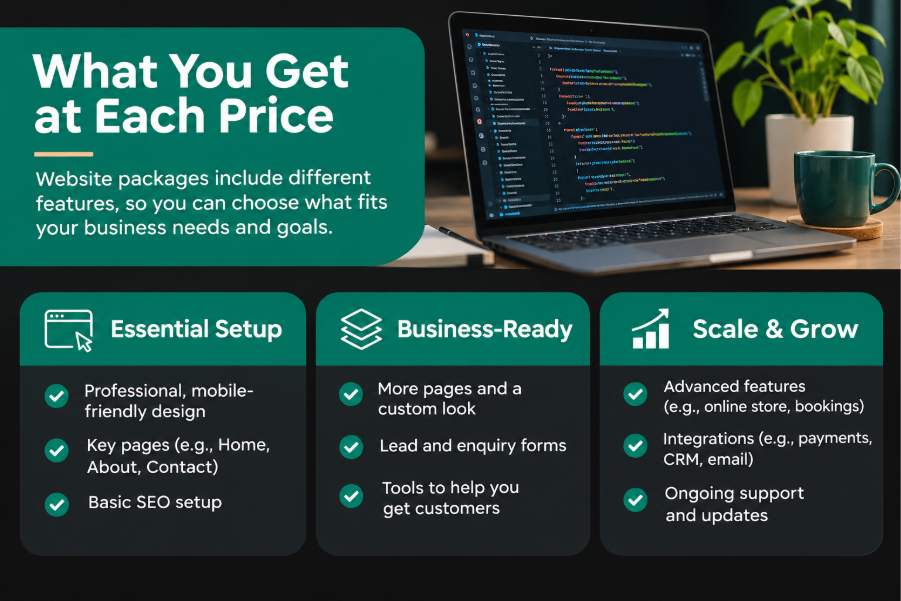
At £500, expect a template site on a builder. The design options are limited, and you’ll most likely write the words yourself.
Around £1,500 gets you a five-page brochure site from a freelancer, often on WordPress. At £3,000 you start to see custom layouts, better SEO groundwork and some help with copy or images.
By £5,000 you’re usually looking at more pages, tools like booking or CRM links, and support after launch.
Why the Quotes Don’t Match
Providers count design, content, features and support in different ways. One quote might include copywriting and testing. Another might quietly leave both out.
So, skip “Am I paying too much?” and ask, “What exactly does this cover?” A very cheap quote for a “complete” business site deserves a second look.
What Pushes the Price Up or Down
Pages, Design and Custom Features
Each individual page that you will be adding is an additional design and testing task. And then comes the extras – mobile design, online payments, booking functionality, and CRM integration. All of these things add a little extra to the cost of your development process.
However, the cost of the custom features you ask for can make up most of the expenses involved in your website creation process.
Content, SEO and the Technical Side
Before you say yes to anything, find out what the price covers. Copywriting, photos, CMS setup, technical SEO, speed testing, security: each one should be listed as either included or extra. If it isn’t, ask.
Copywriting is the one that catches people out. It’s often charged page by page, and a ten-page site can get expensive quickly. If you’re happy to write the copy yourself, say so at the start. That should take something off the quote.
The Costs Nobody Mentions Up Front
Domain, Hosting and Maintenance
A domain renewal usually costs £10 to £20 a year, depending on the ending. Shared hosting can creep up to £7 to £12 a month when your first term runs out. Most hosts now throw in a basic SSL certificate, so don’t pay extra for one.
Maintenance packages tend to cost £50 to £150 a month. They cover updates, backups and security checks. Before you sign, find out what counts as a “small edit”.
What Additional Costs Come with Building a website?
Premium plugin licences, stock photos, copywriting, SEO work, payment or booking tools and later content changes can all bring their own recurring fees.
Ask for these to be listed in the quote, even if the price is nil. Raising extras before you sign is far easier than arguing about them afterwards.
Working Out Your Three-Year Cost
The build fee is only the start. To see the real figure, add up the build fee, three years of hosting and domain costs, 36 months of maintenance, and three years of any paid plugins or tools. Add VAT if it’s missing.
A builder plan works the same way. Multiply the monthly price by 36, then add domain renewals. What you save in money, you pay back in your own time, because you’ll do more of the setup and writing.
Paying Monthly or Paying Once
Monthly plans spread the cost, which helps cash flow. The catch is that over three years you can end up paying more than a one-off build would have cost.
Look at the minimum term, what support is included, and what the price jumps to when the first contract ends.
Also ask what happens if you leave. Can you take your site, content and domain with you? Some providers keep the site on their own platform. Get the answer in writing before you sign.
Before You Say Yes to a Quote
Go through these points with the provider:
- Number of pages and features
- Who supplies the content and images
- Mobile design and testing
- SEO basics, like page titles and redirects
- How many rounds of changes you get
- Hosting and maintenance terms
- Ownership and handover
- Payment stages and VAT
- Launch testing and how long support lasts
Who Owns the Website Once You’ve Paid?
A website has several components, each of which may have a different owner. The domain, content, code, hosting account, and software licences may all be held by different people.
Register the domain in your own name. A freelancer may keep the copyright in their work unless your contract hands it over. GOV.UK has a plain guide to how copyright works.
If you ever change developers, you’ll need admin access, a full backup and some help with the move. Put access, backups, transfer terms, and exit clauses in writing.
What a Redesign Costs
People use “refresh”, “redesign” and “rebuild” as if they mean the same thing, but they don’t. A refresh gives your site a new look and updated content. A redesign goes further and changes the layout and structure. A rebuild means replacing the platform or the code underneath. The deeper you dig, the more you’ll pay.
When you get a quote, check that design, content and migration each have their own line. If they’re lumped together, you can’t tell what you’re paying for.
Protecting Your Search Traffic
In case Google is already bringing people to your website, you should prepare yourself before making any changes. You need to list down all URLs you are using. You will retain the URLs that perform well and will create redirects from the old URLs to the new ones. Test the process, and after that, monitor Google Search Console on a regular basis for a couple of weeks.
Technical and Legal Basics for a UK Site
Speed, Security and Mobile
HTTPS, responsive design, and data backup must be employed. Check the Core Web Vitals for measuring the speed of load time, interactivity, and visual stability of the page.
Ensure your important pages are crawlable by the search engines. Good quality writing is good for people and search engines alike.
Privacy and Cookies
The rules vary from one business to another. Most sites need a privacy notice if they collect personal data.
Cookies need more care. The Data (Use and Access) Act 2025 changed the PECR rules and added narrow exceptions for some low-risk analytics and website appearance cookies. The ICO has updated its guidance to match.
Those exceptions are tightly drawn. Visitors still need clear information and an easy way to opt out. Advertising cookies still need consent, and fines for PECR breaches now match UK GDPR levels.
Limited companies must show their company details on the site. Online sellers have extra information duties on top. Check which ones apply to you.
Tracking What Works
Set up GA4, Google Search Console and Bing Webmaster Tools. Then track form submissions and phone calls, not just visits.
Is the Website Worth It?
A website won’t bring in customers on its own. It needs traffic, a clear offer, and easy ways to get in touch. For a local firm, a free Google Business Profile often does more good in the early days.
To see when your site pays for itself, take your three-year total and divide it by the profit one customer brings you. Profit here means sales minus direct costs. The answer is how many customers you need to break even.
Then add what you spend on marketing and how many visitors turn into enquiries. That gives you a more honest picture of your return.
Keeping Costs Down Without Cutting Corners
Start with the pages that bring in enquiries. For most firms that’s home, services, about and contact. Choose a good template, and add a blog, booking tool or shop once the basics are working.
Some things aren’t worth trimming. Security, ownership terms, mobile usability and technical SEO cost more to fix later. Even a malware cleanup can get pricey.
Setting the Right Budget for Your Business
Your budget should follow what the site has to do for you, not the national average.
- New business, small budget. Start with a builder or template at roughly £9 to £25 a month and set up a free Google Business Profile.
- Local service business. Put your money into service pages, contact forms, mobile usability and local visibility. A freelancer site is often enough.
- Growing company. Move to professional development once integrations, content needs or support justify it.
- Online shop. Plan for secure checkout, product management and fees. Shopify Basic is £19 a month on annual billing, with online card fees from 2% plus 25p.
- Existing website. Price the redesign, the SEO risk and the migration before you decide to rebuild.
Not Sure What Your Website Should Cost? Let A8OM Help
Every Small Business Website Cost range in this guide comes down to one question: what does your website need to do for your business? That is where A8OM comes in. We build websites around your goals, from website development that covers design, mobile performance and technical SEO groundwork, to digital marketing for small businesses that turns visitors into enquiries once you are live.
We start by talking through your pages, features, content and budget. Then we give you a clear, itemised plan that spells out what is included, what is extra, and who owns the finished site, so there are no surprises after launch. Whether you are starting from scratch, redesigning an existing site, or comparing quotes you have already received, talk to the A8OM team for a free strategy call and a website plan that fits your goals and your budget.
Frequently Asked Questions
Yes, usually through a builder or template. You’ll need to supply your own content and handle most of the setup.
Not necessarily. It sits within common UK ranges. Judge it by what the quote includes and who owns the finished site.
Builders run about £9 to £25 a month for most small business plans. Hosting and maintenance for a professionally built site can add £57 to £162 a month.