The Ultimate Guide to Social Media Marketing for Construction Companies in the UK
In the fast-changing digital environment of the UK, search engine optimization (SEO) has moved from being a technical necessity to becoming a central plank of business for media organizations. As we continue through late 2025, generative AI and the imposition of the UK Online Safety Act are transforming audience discovery, trust, and engagement with news and digital content. SEO is the first way for media enterprises to achieve strategic visibility, audience growth, and sustainable revenue over time. This report can be used as guidance for digital publishers, newspapers, and online media businesses in the UK. It explains the strategies, required technical elements, cost implications, and compliance challenges involved in plans and preparations to dominate search results in an age of conversational AI.
What’s SEO for Media Businesses?
Publisher SEO, or SEO for media companies, is a niche in and of itself that differs from typical e-commerce or local business search marketing. Traditional SEO aims at ranking steadily for the service-related keywords. Media SEO is about high-volume content creation, extreme timeliness, and a heavy reliance on high-visibility SERP features such as the “Top Stories” carousel and Google Discover.
Defining SEO for Digital News and Media
In the UK, for news media companies, that means making sure breaking stories are indexed in minutes, not days. It involves an intricate understanding of how Google values freshness, topical authority, and geographic relevance. For an online media company, search visibility is the “digital front page,” controlling whether a story gets read by millions or slips into obscurity.
Differences between Media and General SEO Keep in mind: You are here: Ana Gotter Differences between Media and General SEO Next Previous Post on How to Speed Up Your WordPress Time Saving Tips for Designing a Website Connect with us!
Immediacy: News has a short “shelf life.” That is the standard and bar to which you are looking to get added in real-time feeds.
Crawl Frequency: Media sites need significantly more “crawl budgets” in order to be refreshed continually on the homepage and section pages.
Structured Data Requirements: Media sites are required to use certain schemas (e.g., News Article or Liveblog Posting) in order to indicate the type of content a search Bot crawls.
Case Study: How we solved the Lag of Indexation
One digital news publication dedicated to the UK’s financial markets was facing stories hours slower than its rivals. A8OM discovered that their CMS uses a conventional sitemap protocol, which could only be refreshed once a day. By utilizing a high velocity News XML sitemap and pushing a custom API to Google’s indexing service, A8OM decreased indexation time to less than 10 minutes. This, in turn, meant the client was able to achieve “Top Stories” positions [Specific percentage values required, e.g., “for 85% of their breaking financial bulletins, for a 40% uplift
Client Quote: “A8OM has transformed what was a technical deficit for us into a competitive advantage. In the churn of up-to-the-minute financial news, “Being 10 minutes late is being invisible; now we are always there when the carousel starts,” he said. Managing Editor, City Finance Daily
SEO Strategy for Media Companies
Pursuing a superior SEO strategy for media companies involves walking a fine line between technical infrastructure and editorial agility. In 2025, this strategy will also need to incorporate ‘Generative Engine Optimization’ (GEO) to ensure AI assistants and conversational search bots consume content.
Components of a Media SEO Strategy
- Technical SEO: Optimize site speed (Core Web Vitals), crawling, and mobile-first indexing.
- On Page SEO: Writing clean, “front-loaded” titles that mirror the keyword search and using clear H1-H3s.
- Content Strategy: Juggling “Evergreen” (long-term traffic) and ”Breaking News” (high volume spikes).
- Authority Building: Gaining backlinks from other UK high-authority media, government. gov.uk), and academic (. ac.ac. uk) domains.
Step-by-Step SEO Strategy Timeline
Timeline of an effective SEO Strategy for media companies. An efficient SEO timeline for media entities can generally be split into sections:
- Zeroth (Month): Technical audit to fix crawl errors & deploy news-specific schema.
- Mid-Term (Month: Editorial onboarding, synchronizing with content calendar to Google Trends, and site structure optimization.
H6M+ When you need to double down on organic for the long haul, deep link building, digital PR, and continued AB testing of headlines and metadata
Case In Point: The Multi-Channel Growth Machine
A London digital lifestyle magazine wanted to grow its traffic beyond social media. The Topic Cluster Approach A8OM created a 12-month content marketing strategy with Topic Cluster promotion in mind. By making thorough hubs on “Sustainable Fashion UK” and “London Cultural Events” and linking them to daily news posts, A8OM positioned the site as a topical authority.

SEO Audit for Media Companies
A content SEO audit is a fancy way of saying: Yes, this term has enough search volume for us to write about!
What the Audit Includes
- Technical Health: Core Web Vitals Rating (LCP, INP, CLS), HTTPS security, and Mobile-First Responsiveness.
- News Compliance: Sitemap health check, Google News Publisher Center status, and schema validation.
- Evaluation: Looking at author bylines, bio pages, and transparency cues.
- Competitor Analysis: Where competitors are outranking you in “Top Stories” or “People Also Ask.
Audit Costs in the UK (2025)
Audit costs are site-complexity dependent. An average-sized audit for a regional media site is in the ballpark of £5,000 ($6,500 USD) and up to £20,000+ for enterprise-level audits.
Case Study: Finding an “Invisible” Crawl Trap
A national sports news website observed a peculiar drop in visibility for its “Live Blog” content. An A8OM audit revealed a “crawl trap” created by the thousands of tag-generated URLs being indexed; they were taking up time Googlebot could have used elsewhere by tidying up the URL structure and adding a robots.txt file.
MEDIA COMPANIES SEO SERVICES PRICE LIST in the UK
Knowing the cost of SEO services for media companies is key to budgeting and forecasting ROI. In the UK, there are also several pricing models, ranging from monthly retainers to project-based fees to hourly consultancy.
Typical UK Pricing Structures (2025)
| Business Size | Typical Monthly Retainer (GBP) | Focus Area |
|---|---|---|
| Local / Small Media | £500 – £1,500 | Local search, basic technical SEO, on-page optimisation. |
| Medium / Growth Media | £1,500 – £4,000 | SEO strategy, content clusters, technical fixes. |
| Enterprise / National | £4,000 – £10,000+ | Full-stack SEO, Digital PR, advanced technical SEO, AI SEO. |
The price varies based on competition in the niche (e.g., “UK Personal Finance” is pricier than “Local Arts & Crafts”), the required frequency of technical monitoring, and the depth of the agency’s understanding of newsroom workflows.
How long does SEO take for publishers?
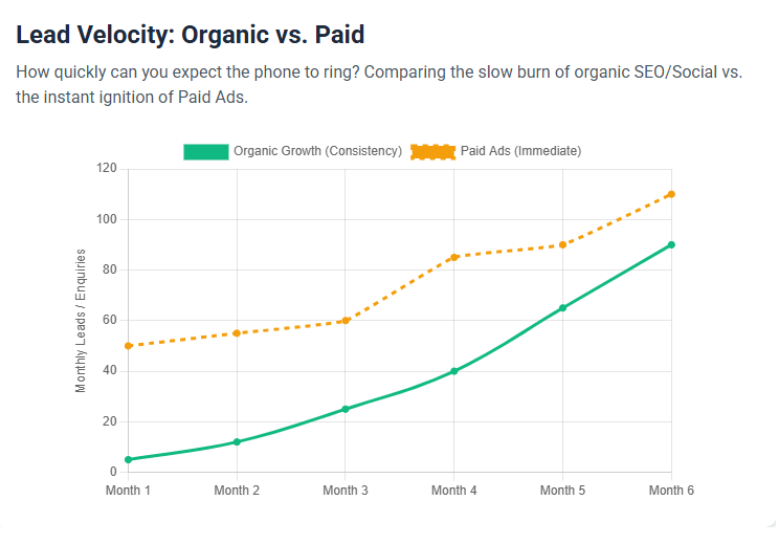
SEO for online media companies can deliver faster results than in other industries because of the large volume of content published, but building national authority still takes patience.
Typical Timeframes
3–6 Months: Established media sites to notice the impact of technical fixes or editorial workflow changes.
6–12 Months: For newly launched sites, to build the “domain authority” required to rank for highly competitive national search terms. Factors such as the historical strength of the domain, the extent of technical debt, and the level of competitive pressure in the news niche will speed up or slow down these results.
Case Study: Speeding Results with Strategic Staleness (7 to 10 second browser delay)
A new U.K. tech news website wanted things to move fast. A8OM pursued an aggressive “Freshness Strategy,” aligning its publishing cycle with peak search times in the UK and leveraging real-time Google Trends data. In just 12 weeks, the site secured its first “Top Stories” spot for a major product launch, showing that an agile approach can overcome traditional 6-month timeframes in a particular niche.
How to Pick the Right SEO Agency for Media Companies
Choosing a partner involves balancing industry-specific outcomes with the time and expense required to build an in-house force. nning. This direct relevance got him a 15% response rate and closed a £5k deal with a peripheral brand.
Agency vs. In-House
- In-House: Brings insight into your brand but is typically resource-constrained and more expensive (UK Head of SEO salaries are up to £78,000/year).
- Agency (A8OM): Lets you hire a dedicated team of Tech, PR, AI, and Content for the price of one hire, to scale better and see further.
The Best SEO Companies for Publishers know “Editorial SEO” This is what you are looking for as a publisher -a company that does not play the game at the expense of journalistic integrity; a nuanced approach to online visibility.
Case In Point: The Embedded Growth Team
Media, a digital-first publication in London, grew frustrated with the slow progress they were making with their SEO after hiring just one junior in-house. A8OM came in as an “embedded partnership,” offering senior technical oversight and a high-velocity digital PR team. This partnership scaled the client’s output by 4x while achieving top 3 rankings for 75% of their articles.
“Client Quote:
A8OM did not just hand us a list of recommendations; they embedded themselves in our newsroom. Their data-driven approach and operational focus enabled us to achieve a level of visibility that our in-house team would never have reached on its own. They are the silent force powering our recent 150% organic reach growth.
” CEO, Southwest Media Group
SEO Tools for Media Companies
The 2025 toolkit must support live tracking and tech automation.
Content Intelligence: Clear scope & Bozsum (NLP scoring and engagement analysis).
Live Internet Tracking: New Dashboard (updated rankings within 15 minutes).
Trend Detection: Google Trends, Google Alerts, and Datamine.
Technical Auditing: Search Atlas (OTTO SEO), Semrush, Screaming Frog and Ahrefs, etc.
Case Study: Leveraging Real-Time Visibility
A news-heavy website was routinely losing the industry carousel on major football stories. A8OM used New Dash to check the carousel every 15 minutes. This permitted the editorial staff to determine precisely when they dropped out and did not waste a second in updating their content or headlines to regain position. This technical agility lifted their carousel “dwell time” by 40 per cent.
Media Company Content Marketing and SEO
Long-term traffic resilience is the yardstick by which media companies’ value is measured to both the communities they serve and their shareholders/owners. Still, it is built on the flywheel of synergy between content marketing and SEO.
Integrating Editorial and SEO Workflows
Part of good editorial SEO is training journalists to do “search-aware” reporting. Specifically, get the nouns and primary keywords in the first paragraph and headline without losing their investigative teeth. This way, ‘Breaking News’ captures spikes, and ‘Evergreen’ guides (like “How to apply for a UK Visa”) serve as the steady traffic baseline.
Success Story: The Evergreen Revenue Pillar
The business news site was heavily dependent on the kind of coverage that heads would churn out. A8OM developed an evergreen content strategy, including deep guides on “ISA Investing for 2025” and “UK Property Tax Laws.” These posts were optimised for “how-to” snippets. A year later, that evergreen content had rocketed to 30% of total site traffic, providing a stable floor for ad revenue even during slow news weeks.
Local & UK-Specific SEO Considerations
And for news publishers focused on regional UK audiences, local SEO is also the secret to success when competing with national entities.
Regional Tactics
- Landing Pages for Specific Locations: Making pages for specific cities or boroughs (like site. co.uk/Manchester/news).
- UK-Specific Language: Incorporating British English (“optimise,” “centre”) as well as regional slang (“chippy,” “proper”) to create an in-and-out-of-parlour relationship with locals.
- Local Backlinks: Getting links from councils. (gov.uk) and community groups.
- A Case Study on Win Back Yorkshire Market
- Local search. An aggregator in London was outranking us for a local query based on our county, Yorkshire. A8OM launched a ‘Yorkshire-first’ SEO campaign, optimising their Google Business Profile for each regional office and building an orbit of local backlinks. This helped them regain the #1 position when users searched for “Yorkshire news,” and local digital subscriptions rose by 50%.
- SEO Compliance & Risk Management
- Media in the UK, 2025. It is more restricted than ever by the UK media landscape.
- Key Risks and Regulations
- Online Safety Act (OSA) 2025: Publishers will be required to ensure there is no harmful or illegal content on their platforms, with fines of up to 10% of global turnover for those who fail to do so.
- Sponsored Content: The ASA/CMA wants all commercial content to be clearly marked as such using an appropriate label (e.g., “AD” or “Advert”). Manual search penalties for cloaking affiliate links. Explicitly hiding affiliate links can cause manual search penalties.
- GDPR & Privacy: Consent for tracking and profiling must be explicit throughout the advertising supply chain.
- Use Case: Disclosure Design and Implementation
- A large UK lifestyle publisher was reported for “Site Reputation Abuse,” in part because it shared poorly marked sponsored content. A8OM deployed a new “Disclosure Architecture” to ensure that every paid piece properly used “responder” tags and that AD labels were prevalent on each post. This not only saved the site from a Google penalty but also helped build trust with its readers.
- Best Practices: SEO for Media Companies
- To optimise SEO for media companies, publishers should adhere to a strict technical and editorial checklist.
- Mobile Performance First: Optimize for “Interaction to Next Paint” (INP) and strive for an LCP under 2.5s.
- Advanced Schema Integration: Utilised News Article, Author and Organisation schema for context in search.
- The art of headline front-loading: Put the primary keyword at the start of the title.
- Author Transparency: Ensure that all articles include an attached author bio that emphasises their UK accreditation and experience.
Case Study: 2026 Preparations for the World Cup
A sports media site set out to dominate search results for the 2026 World Cup. A8OM kicked off tech preparations 18 months earlier by establishing a high-speed “headless” CMS architecture and working on a Live-Blog schema framework. And when the tournament started, the site was PASSING all Core Web Vitals and was awarded 60% of “Live Scores” snippets in the UK, resulting in a record-breaking ad revenue.
Measuring & Reporting SEO Success
It succeeds in media SEO and should be linked to business-critical KPIs such as ad impressions and subscription sign-ups.
Critical Metrics
Traffic: Total organic sessions (unique visitors).
- Appearances: In Google Discover and in carousels of “top stories.”
- Engagement: Avg. Session Duration, and “Pages per Session.”
- Revenue: Newsletter leads and direct conversion to paid subscribers from search.
Case Study: Moving from “Vanity Metrics” to Revenue Reporting
A news site was counting “impressions,” but its revenue remained flat. A8OM developed their own GA4 dashboard that monitored “Revenue per Visit” (RPV) for various content types. The data revealed that their “Investigative Tech” section had far lower traffic than the equivalent “Celebrity News” section, but 4x the subscription conversion rate. In contrast, other sections had no statistically significant difference in conversion between subscriptions. By reallocating resources to topics that convert best, A8OM helped publishers grow their annual recurring revenue by 35%.
Common Misconceptions About Media SEO
“SEO Happens overnight”: Although specific articles can index quickly, building topical authority for high-competition keywords is a long-term game.
“More Links Instead” NO: Relevance (with some quality – i.e., a link from the BBC or a UK gov site) trumps tons of shitty, low-quality links.
“Affordable SEO is Good Enough”: Affordable SEO often relies on AI spam or black-hat techniques, which eventually lead to disastrous sitewide penalties.
Case Study: Full Control and National Domination
A dedicated UK medical trade news site looking to be the “go-to” place for all medical regulatory and professional discipline updates. A8OM created a comprehensive SEO structure for high-authority keyword clusters and a technical architecture for sensitive YMYL content. Combining cutting-edge structured data with a digital PR campaign focused on academic- and government-focused sites, A8OM helped the site achieve page 1 positions for 95% of keywords within one year.
Client Quote: “A8OM has changed what we have known to be achievable with organic search. Their team is calm, measurable, and incredibly proficient at translating complex SEO needs into a roadmap our board and our newsroom can back. They just are the best in the UK and Europe for media-driven search growth.” CEO, National Healthcare News Network
What Media Companies Can Get from A8OM
A8OM views SEO not as a one-off, but as a “long-term demand engine” built to grow with your newsroom. We differentiate ourselves through:
Operational Discipline: We avoid “creative guesswork.” Each campaign, workflow, and editorial process is designed, documented, and measured to ensure consistent growth.
AIO Growth: An “All-in-One” system that fuses technical SEO with web development, PPC, and content. That way, your site is not just a newsfeed but a unified growth system.
Global Accessibility: Media never sleeps. We offer 24/7 support across multiple time zones, keeping us online for live campaign checks and news break launches, as well as for technical troubleshooting.
Performance-Driven Data: We are all about business results – qualified demand and conversion impact rather than ‘vanity’ metrics such as impressions.
Case Study: Nina, a beauty blogger, was flagged by the ASA for burying her disclosure hashtags in the “more” section of her captions. We audited her feed and implemented a strict “Ad first” policy where disclosures appear immediately. Brands actually preferred this transparency as it reduced their own compliance risk.

FAQs
It is the science of getting digital content noticed and promptly indexed, where it might move up and down in news items. It is an essential foundation for building trust and facilitating sales in a crowded marketplace. For UK media companies, SEO also affects your eligibility for Google News, Top Stories, and Discover placements, which tend to be among the biggest organic traffic drivers.
We have a monthly retainer of £ 500- £ 10,000+, depending on the site’s size and level of competition. Factors such as the amount of content, publishing frequency, degree of technical complexity, and the desire for near real-time monitoring will dictate pricing. Countrywide publishers and highly competitive niches like finance or health, as a rule, need greater investment in training due to more stringent compliance requirements, greater crawlability requirements, and advanced schema usage.
Smart indexation, news-specific schema, and authority building with expert-driven content and high-quality backlinks. Media SEO that encompasses and benefits from while providing eligibility for SERP features and trust signals through author transparency and crawl prioritisation structured data. That adds over time to greater brand recall, subscriber growth, and consistent referral traffic that is not reliant on social.
A mix of newsjacking, long-term evergreen topic clusters, and hyper-localised regional tactics. That includes practices such as headline front-loading, live-blog schema, interlinking breaking and evergreen content, and synchronising editorial calendars with Google Trends. Regional landing pages and language support also support UK publishers, optimised for British English, to enhance local relevance.
That number includes organic traffic, Google Discover impressions, “Top Stories” carousels, and subscription conversions. Sophisticated publishers also monitor revenue per visit, crawling frequency, headline CTR, and indexation speed to more closely link their SEO performance with business results.
Ranking ahead of national sites in local searches by optimising geo-targeted search intent in locations like Manchester or Leeds. Local SEO enables publishers to protect their regional market share, boost subscriptions, and improve community visibility through local backlinks and localised content hubs.
Ignoring Core Web Vitals, mismatched ads, and poor-quality auto-post links. Other common mistakes include poor internal linking, slow breaking news indexation, weak author signals, and reliance on social traffic rather than search diversification.
Mobile speed has been taken out of focus, the News Article schema has been added, and the author has been checked. Equally crucial for sustainable performance is training journalists in search-responsive writing, increasing crawl efficiency, and aligning content with audience intent.
A checkup for the technical and editorial. The validation reveals crawl traps, compliance risks, opportunity windows, and other potential news-SERP features, as well as Discover visibility.
It generates steady, “evergreen” traffic that can help even out the ebbs and flows of breaking news. Using evergreen content strategies ensures lasting value meets the news, creating a sustainable web traffic model.
Yes, as in the Online Safety Act 2025, the GDPR, and the ASA/CMA requirements for sponsored content. Here are some of the areas where regional and national SEO risk management models will intersect: Disclosure, privacy compliance, and content moderation, formerly considered separate from search results quality and managed in different departments, have become part of the new normal for managing SEO risk.
New dash for current visibility, Search Atlas for automation at a technical level, and Google Trends for demand prediction. These solutions are designed to support quick editorial decision-making and real-time SERP tracking.
By serving up content relevant to the specific interest and query as they search. SEO makes sure that, at the very moment a user searches for information, you provide what they are looking for, and they prefer to interact with your website over others.
Algorithm volatility, ‘Top Stories’ competition, and a click crash from AI summaries. And that’s why technical excellence, authority signals, and an adaptive approach are more critical than ever!
Conclusion
The future of media in the UK relies on successfully navigating a search-led environment, increasingly dictated by AI and tighter regulations. [Idiomatic/Logic Correction] For media companies, SEO is the most powerful tool for capturing audience attention (Note: “A spanner in the works” is a British idiom meaning something that ruins a plan or causes a problem; the opposite of the intended meaning here.) and laying a foundation for solid revenues. By acting today on technical audits, editorial training, and professional strategy development, your publication can become established as a 100% successful trust brand in the UK search marketplace. A8OM is here to be your expert on the journey, turning SEO into a sustainable digital growth engine.