Introduction
So, you have a dental practice in the UK. You are great at what you do. Your patients love you. Your team is fantastic. And you are thinking about what will come next. How do you get more of those patients through the door without spending a fortune or turning into a full-time marketer?
Welcome to online marketing for dentists. It is not as scary as root canal work. I Promise.
The thing about dental practice right now is this. Everyone is fighting for the same patients. The UK dental market is worth over £7.7 billion. That sounds brilliant until you realise nearly 12,000 other practitioners are thinking the same thing you are. Most people looking for a dentist start with Google.
They check your reviews. They scroll through your website on their phone during lunch. Maybe they look at your Instagram if they are considering something cosmetic. If you are invisible online, you might as well not exist.
That is where proper online marketing comes in. Not the flashy nonsense that promises overnight miracles. The real stuff that works.
What Actually Matters When Marketing Your Practice Online
Let’s talk about what people do before they book with you. They Google things like “dentist near me,” or “teeth whitening Manchester” or “emergency dental Croydon.” First page of Google? You are golden. Second page? Might as well be page 200. Nobody is scrolling that far.
Local SEO is where most practices should start. It is not glamorous. You are basically making sure Google knows you exist, where you are, and what you do. Your Google Business Profile needs to be spot on. Complete address. Opening hours that are actually correct. Recent photos of your practice do not look like they were taken in 1997. Get reviews from happy patients. Reply to them. Even the grumpy ones.
The website matters more than you would think. People judge fast. Your site loads slowly or looks dodgy on mobile? They are gone. You need clear information about what you offer. How much does it cost? Even ballpark figures help. And a phone number that is easy to find. Not buried in a contact form that takes ages to fill out.
Here is what catches people out. They build a beautiful website, then wonder why nobody calls. Beautiful does not mean effectiveness. You want both. Professional website design and development needs to balance aesthetics with conversion. That means thinking about user experience from the first click.
The Stuff That Brings Patients Through the Door
Different treatments need different approaches. Emergency patients act differently than someone considering Invisalign. Emergency? They need you now. They are clicking the first practice that looks legit and answers the phone. Cosmetic treatments? That is a completely different game. Those patients research for weeks. They are comparing practices. Reading every review. Stalking your before and after photos.
For emergency work, Google Ads can be worth it. You are paying maybe £3 to £12 per click for general dentistry. Potentially more if you are in London. But if that click turns into a patient who needs work done, you have made that back easily. The key is making sure your landing page matches what they searched for. If they typed “broken tooth emergency London” and land on your homepage talking about your philosophy and heritage since 1982, they are clicking back.
Cosmetic procedures like Invisalign or veneers? That is where content helps. People want to know what it costs. How long does it take? Whether it hurts. What do the results look like? Write about it. Put together a proper guide. Show real examples if patients consent to it. These folks spend weeks deciding. So, give them something useful while they are thinking about it.
Social media works for dental practices. But not how you would expect it. Instagram and Facebook are brilliant for cosmetic work because it is visual. People can see transformations. They can imagine themselves with those results. General dentistry? Social media is more about staying visible and building trust. Share tips. Show your team. Maybe post about that charity thing you did. Just be real. Nobody wants corporate nonsense about “delivering excellence.” They want to know if you are a decent human they will not mind opening their mouth for.
What This Actually Costs and What You Get Back
Most UK dental practices spend somewhere between 5% and 10% of their annual revenue on marketing. If your practice brings in £800,000 a year, that is roughly £40,000 to £80,000. Sounds like loads until you break it down monthly. Then you realise you are trying to fill appointment books in a market where everyone is competing for the same patients.
New practices or ones trying to grow faster might push that to 10% or 15%. London and big cities cost more because competition is tougher and advertising is pricier. A click for “dental implants London” might cost you £25 or more. Same search in a smaller town? Maybe £8.
Done properly, you are looking at £3 to £5 back for every pound you spend. Sometimes more if you are targeting high-value treatments. An implant patient might be worth a few thousand pounds to your practice. A cosmetic case could be £3,500 or higher. Suddenly, that £150 you spent getting them through the door looks pretty reasonable.
But here is the bit most people miss. The timeline. SEO does not work overnight. You might spend £1,500 to £3,000 a month for six to nine months building your rankings before you see proper results. After that, maintenance drops to maybe £800 to £1,200 monthly. And the traffic keeps coming without paying per click. It is the long game. Paid ads like Google Ads work faster, but stop the second you stop paying. You need both, really.
If you are hiring someone to handle your online marketing, here is roughly what you are looking at in 2026.
Local SEO work typically runs £800 to £2,500 monthly. Google Ads management? Expect to pay 15% to 20% of whatever you spend on ads as a management fee. Social media management runs anywhere from £500 to £1,500 monthly. Content writing is usually £150 to £400 per blog post if you are hiring someone decent. A proper website build or redesign? Budget £3,000 to £15,000, depending on what you need.
What You Legally Can and Cannot Say
This is where loads of practices get themselves in trouble. The General Dental Council is strict about advertising. And for a good reason. You cannot make claims you cannot back up. You cannot show patient testimonials in your advertising. Yes, really. Google reviews are fine because that is a third-party platform you do not control. But you cannot put “Sarah from Brighton says we are amazing” on your homepage or in a Facebook ad.
Before and after photos need proper consent. You have to make it clear that results vary. You cannot compare yourself directly to other dentists. You cannot use qualification letters you have not actually earned. Or imply that you are a specialist unless you are on the GDC specialist list.
Your website needs your GDC registration number, where you qualified, your complaints procedure, and whether you do NHS or private work. It is not optional. The Advertising Standards Authority watches dental ads pretty closely now.
If you are advertising prescription treatments like teeth whitening, there are extra rules. The CMA did a big study on private dentistry. They are watching pricing transparency carefully. You need to be upfront about costs. “From £X” is fine if it is achievable for some patients.
Getting this wrong can mean GDC complaints, ASA rulings, and even legal problems. Most practices mess it up accidentally. But ignorance is not a defence. If you are hiring an agency, make sure they know dental advertising rules. General marketing agencies often do not.
SEO Versus Paid Ads
People always want to know. Should I do SEO or Google Ads? It is a bit like asking whether you should have a front door or windows. Kind of need both yeah?
SEO is the long-term play. You are building something that lasts. Once you rank well for “dentist in Bristol” or “emergency dental care Leeds,” that traffic keeps coming whether you are actively working on it or not. The catch is that it takes months to see results. You are looking at six months minimum. Often closer to a year for competitive terms.
Google Ads work immediately. You can start getting calls this afternoon if you want. You are paying for every click. But you control exactly when and where your ads show up. The problem is that once you stop paying, the traffic stops. And if you are in a big city competing with corporate dental groups with massive budgets, those clicks get expensive fast.
Smart practices do both. SEO handles the foundation and brings in steady traffic at a lower long-term cost. Ads fill the gaps and provide results while SEO builds up. You might allocate 40% of your budget to SEO and 30% to paid ads. With the rest split between website improvements, social media, and content.
Social Media and Reputation
Your online reputation is worth more than you probably think. People trust online reviews almost as much as personal recommendations. Someone searching for a dentist looks at your star rating before they look at anything else. 4.8 stars with 200 reviews beats 5 stars with 3 reviews every single time.
You need a system for getting reviews. Not buying them obviously. That is both illegal and stupid. Just asking happy patients to leave feedback. Most people will if you make it easy. Send a follow-up email with direct links to your Google Business Profile. Train your reception team to mention it. The practices that get loads of reviews are not lucky. They are organised.
Reply to reviews. All of them. The good ones with a quick thank you. The bad ones thoughtfully and professionally. Never get defensive. Never argue. If someone had a genuine bad experience, apologise and offer to discuss it privately.
Social media is a reputation thing as much as marketing. People check if you are active. They look at your team. They want to see that you are real humans. Not a faceless corporate chain. You do not need to post every day. Twice a week is fine if it is decent content. Dental practices that treat social media like a corporate announcement board get ignored.
What Realistic Results Look Like
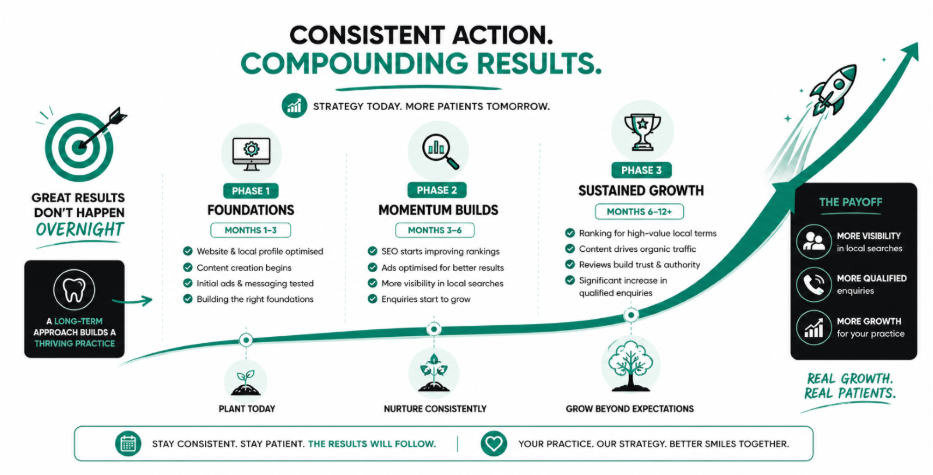
Good dental marketing does not work overnight. Anyone promising instant miracles is lying to you.
In the first three months, you are building foundations. Your website gets optimised. Your Google Business Profile gets sorted. You start creating content. Maybe run some initial ads to test messaging. You will see some results, but nothing dramatic.
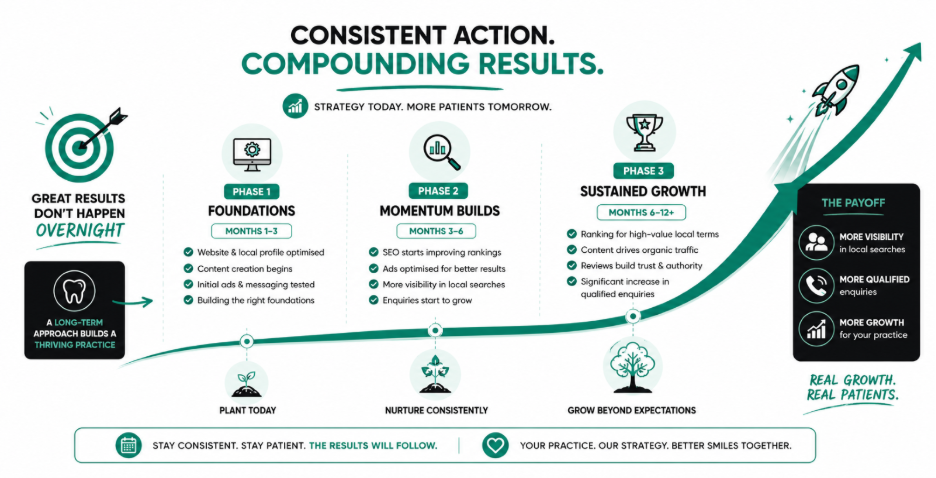
Months three to six is where things start clicking. Your SEO work begins showing up in rankings. Your ad campaigns are optimised based on what actually works. You might see a 20% to 30% increase in enquiries.
Six to twelve months is when it gets interesting. You are ranking for important local terms. Your content attracts organic traffic. Reviews are building. Practices doing it right often see 50% to 100% more qualified enquiries than before they started.
How A8om Helps Dentists Build a Consistent Patient Pipeline
We have worked with enough dental practices to know what works and what wastes money. Not because we are geniuses. But because we have tested loads of approaches and tracked what actually brings in patients.
We do not do cookie-cutter packages. Every practice is different. A three-chair mixed NHS practice in Sheffield needs different marketing than a central London cosmetic dentistry clinic. We take time to understand your practice. Your patients. What makes you worth choosing over the practice down the road?
Local SEO That Actually Gets You Found
Most dental practices lose patients before they ever hear about them. Someone searches “dentist near me” and you do not show up. Game over. We build local SEO strategies that get your practice on the map. Literally. That means optimising your Google Business Profile properly. Photos that show off your practice. Posts that highlight special offers or new services. Review management that turns happy patients into your best marketers.
We also handle the technical side. Local citations across directories. Schema markup that tells search engines exactly what you offer. Location pages if you have multiple practices. And ongoing content that targets the specific treatments and areas you want to rank for.
Paid Advertising That Brings the Right Patients
Not all clicks are created equal. We have seen practices waste thousands on ads that bring in tyre kickers. Or worse, people looking for NHS services when you only do private work. Our paid advertising approach starts with understanding who your ideal patient is. Then we build campaigns that target exactly those people.
For emergency work, we create ads that trigger when someone needs help now. Fast-loading landing pages. Clear calls to action. Phone numbers front and centre. For cosmetic treatments, we build longer nurture campaigns. Retarget people who visited your site. Addressing common concerns. Walking them towards booking a consultation. The compliance stuff is baked in from day one. We know GDC rules, ASA regulations, and CMA requirements.
Content That Educates and Converts
People researching dental treatments have questions. Lots of them. We create content that answers those questions. Not thin blog posts stuffed with keywords. But proper guides that actually help people understand their options. What does an implant procedure involve? How long does Invisalign take? What is the difference between veneers and bonding?
When you become the practice that helps people understand their options, you become the practice they trust. And trust leads to bookings.
Social Media That Builds Trust and Visibility
Social media for dental practices is not about going viral. It is about staying visible. Being helpful. Showing you are a real person. We create social strategies that work for busy practices. Content calendars that balance educational posts with team culture. Patient transformations with tips for maintaining oral health. All while following advertising regulations and protecting patient privacy.
Websites That Convert Visitors Into Patients
Your website is often the first impression someone gets of your practice. We build sites that make that impression count. Fast loading. Mobile optimised. Clear calls to action. Easy navigation. And most importantly, designed around what patients actually need to know to book with you.
We integrate booking systems if you want them. Create treatment cost calculators that help people understand investment. Build before and after galleries that showcase results. And make sure every page guides visitors towards taking action.
Transparent Reporting That Shows What Matters
We are transparent about costs and results. You will know what you are spending. What are we doing with it? And what results are we seeing? Monthly reports that actually mean something. Not jargon-filled nonsense designed to confuse you into thinking we are clever.
We track the metrics that matter. How many people find your site? What percentage of book appointments? Which treatments get the most interest? Where your best patients come from. And most importantly, return on investment.
Making This Work for Your Practice
Start here. Get your Google Business Profile sorted properly. It is free, and it matters more than almost anything else for local visibility. Make sure your website does not look like it is from 2008 and actually works on mobile. Get some proper reviews flowing.
That is baseline stuff every practice should have. From there, it depends on what you are trying to achieve. Growing your private work? Content and social media showcasing results. Filling NHS appointment slots? Local SEO and targeted ads. Launching a new cosmetic service? Specific campaigns aimed at people searching for exactly that treatment.
The practices that do well long-term are the ones that treat marketing as an ongoing thing. Not a one-off project. You would not expect one hygienist appointment to keep someone’s teeth perfect forever. Marketing works the same way. Consistent effort beats sporadic campaigns every time.
If you want to talk about what would actually work for your practice specifically, get in touch. No sales pressure. Just a proper conversation about where you are, where you want to be, and what it would realistically take to get there.